 Altitude Development Partners
A good product can fail to sell because the company chose the wrong customer, described the mechanism while leaving the outcome unclear, or tried to manufacture demand in the wrong place. Here is how to tell which problem you have before building another feature.
A friend of mine, whom I will call Simon, is one of the strongest software engineers I know. He understands how systems fit together and how the infrastructure beneath them behaves. For several years, he poured that ability into an AI-powered fintech and accounting platform with deep integrations, automated workflows, and real technical depth.
He raised capital. He hired a team. He worked nights and weekends polishing the product.
Then he told me he was shutting the company down.
“I cannot get the product right,” he said. “Customers do not understand it. We may be too early. Nobody is buying.”
His marketing team had reached a similar conclusion. Leads were arriving, but they were not converting. Prospects asked for more features, admired the demo, and disappeared.
I asked Simon to give me a week before he pulled the plug.
The product was good. The sales problem was real. Simon had assumed those two facts could not coexist, so every weak sales month sent him back to the product roadmap.
That is a dangerous reflex for a technical founder. Engineering is controllable. A feature can be scoped, assigned, completed, and shipped. A market can reject the premise beneath years of work.
Simon needed a diagnosis before he committed more time to the product roadmap.
Nobody buys a product when the important job remains unclear, insufficiently urgent, difficult to trust, or easier to solve another way. Product quality is only one part of that equation.
CB Insights analyzed 431 venture-backed companies that shut down since 2023. Seventy percent ran out of capital, the final event in most shutdowns, while 43% cited poor product-market fit, 29% cited bad timing, and 19% cited unsustainable unit economics. Two-thirds of the product-market-fit failures were early-stage companies that never found a market. Twenty had reached Series B or later. The same sales symptom can emerge from several underlying failures.
Weak sales usually point to one of five problems:
Product development directly addresses the first problem. The remaining four require changes to the customer, offer, channel, or source of advantage.
This distinction matters because every one of the other four can produce the same feedback: low conversion, long sales cycles, feature requests, price resistance, and prospects who say the product is “interesting.” A founder who treats all of those signals as engineering requirements can spend another year improving a mechanism nobody has a reason to buy.
The product is the problem when customers with an urgent need try it and still cannot achieve the promised result. The evidence appears in usage, retention, and repeated workflow failure.
CB Insights describes retention, meaningful usage, recommendation behavior, and the share of users who would be “very disappointed” if a product disappeared as quantitative signals of product-market fit. Sales objections become more useful when they are checked against what best-fit customers do after adoption.
You probably have a product problem when:
You probably have a positioning or market problem when:
A feature request by itself proves very little. A prospect may be politely explaining why they are unwilling to buy. Ten successful customers blocked by the same missing capability are evidence. Ten unrelated prospects asking for ten unrelated things are evidence that the company has not chosen a market.
A useful customer definition identifies the group that receives disproportionate value and excludes groups whose needs pull the product in unrelated directions.
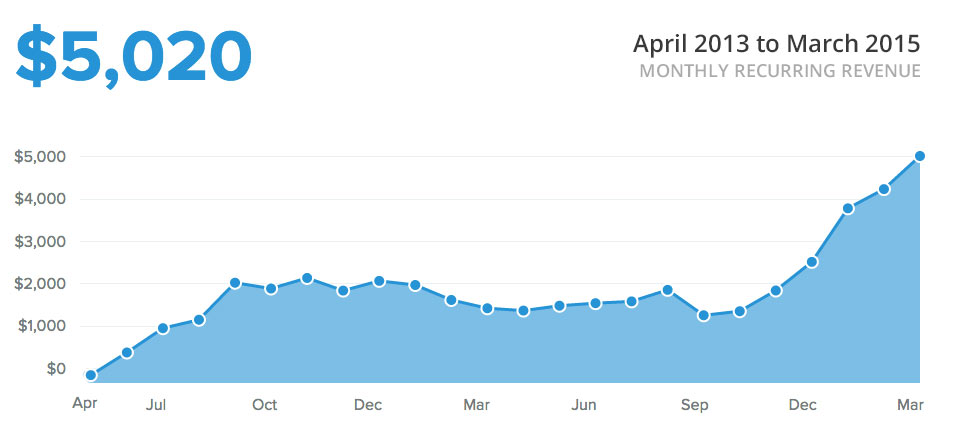
Nathan Barry encountered this problem while building ConvertKit. In October 2014, after two years of work, the company had fallen to $1,207 in monthly recurring revenue. Barry’s market was “anyone trying to build an audience quickly and sell products online.” He later wrote, “If your market definition has the word ‘anyone’ in it, you’ll probably fail.”
ConvertKit narrowed its positioning to email marketing for authors. Monthly recurring revenue grew 23% in October, 27% in November, and 54% in December. The team then discovered that “authors” still attracted the wrong users: its smallest accounts required the most help and cancelled most often, while strong customers did not identify with the label. ConvertKit narrowed again, this time to professional bloggers, and crossed $5,000 in monthly recurring revenue. Barry documented the numbers in Growing ConvertKit to $5,020 in Monthly Recurring Revenue.
 A broad market makes the opportunity look larger while making the offer weaker. Each new customer type adds a new workflow, vocabulary, budget, source of urgency, and reason to hesitate.
Simon’s website spoke to finance teams, accountants, founders, software companies, and professional service firms. The product could help all of them in theory. In practice, the message forced each visitor to study the features and invent a use case for themselves.
The visitor had to answer:
That is too much positioning work to assign to a buyer. ConvertKit’s two successive changes show that specificity has to be tested against adoption, retention, support burden, and willingness to switch.
A market wedge is the narrowest customer group with a shared, urgent problem that your current product can solve unusually well. It gives a company a concentrated entry point into a larger market.
ConvertKit found its wedge among professional bloggers who already operated meaningful email lists and were willing to migrate from another provider. Barry’s account records roughly 100 personal outreach emails producing five to seven customers during the earlier author positioning, evidence that a defined segment also makes direct distribution measurable.
The purpose of a wedge is to focus limited attention on one well-defined entry point, establish credibility there, and create a base for expansion.
A useful wedge contains four things:
Who is the specific buyer?
Name the role, company type, operating environment, and moment that creates demand. “Businesses” is meaningless. “Software development firms closing books across several payment platforms” gives the product something concrete to fit.
What urgent job needs to be completed?
The problem must be frequent, expensive, risky, or frustrating enough to change behavior. Mild inconvenience produces compliments. Urgency produces purchases.
Where does the buyer already look for help?
People with similar jobs and problems tend to read the same newsletters, attend the same events, search the same questions, and gather in the same forums and professional groups. Those places are records of demand before they are marketing channels.
What behavior demonstrates unusual fit?
Look for the customer who adopts with less explanation, returns more often, receives a larger benefit, refers peers, and would be genuinely disappointed if the product disappeared. Behavior is stronger evidence than stated interest.
Simon’s product fit a particular community of software engineers far better than it fit the general audience his company was buying access to. Members shared similar financial infrastructure and recurring accounting problems. They used the same language and already traded advice with one another.
His team had been publishing feature videos and generic social posts across large platforms. They were paying to interrupt an unconcentrated audience while a concentrated market was already discussing the problem elsewhere.
Finding that community made the existing product’s value legible to a specific customer.
Market the product where people already discuss the job it completes. The smallest relevant room is often more valuable than the largest available audience.
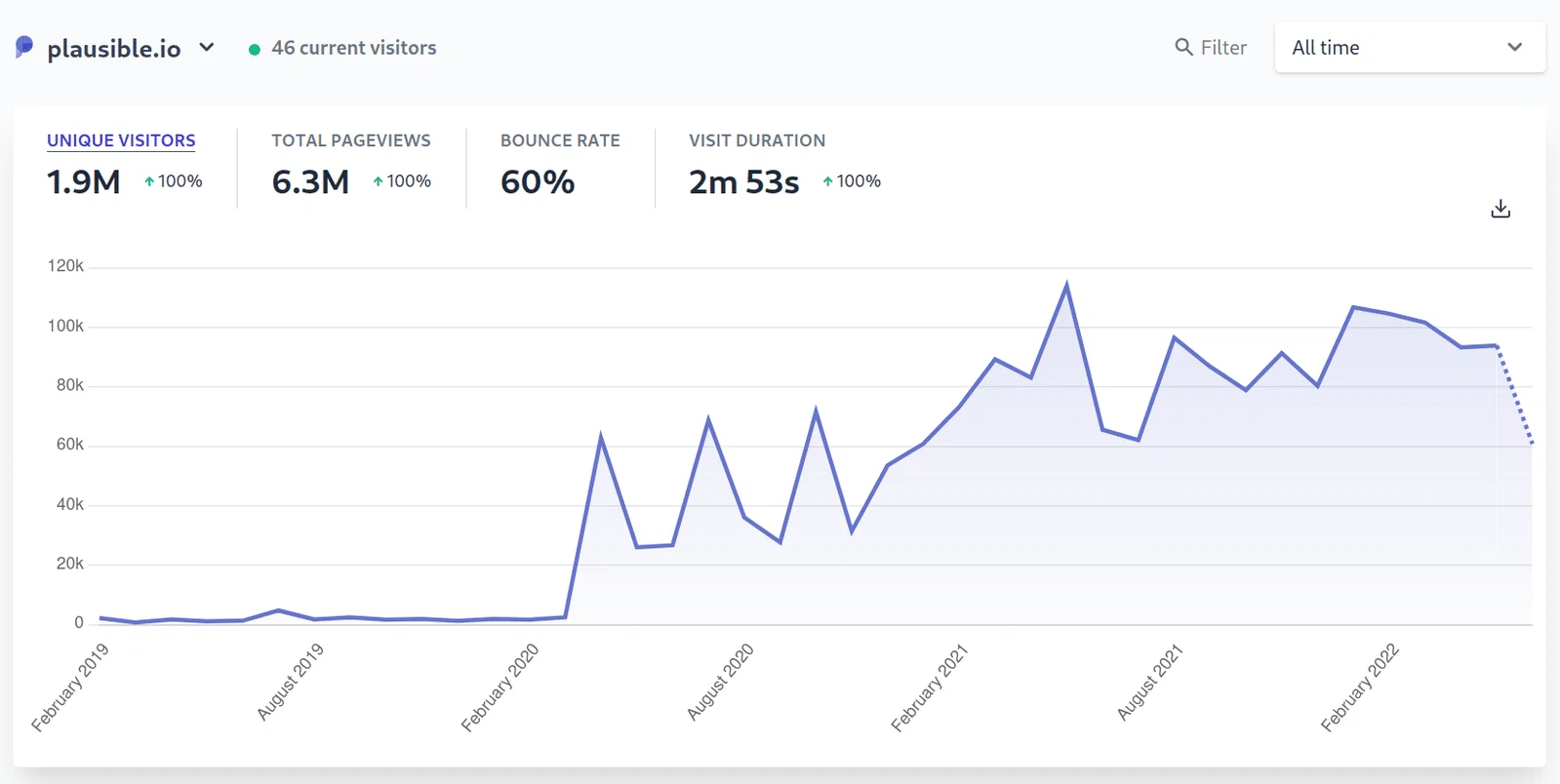
Plausible Analytics grew by joining communities already debating privacy, open-source software, and alternatives to Google Analytics. According to the founders, the company never paid for advertising. A Hacker News post about leaving Google Analytics brought 25,000 visitors in one day, and another about funding open-source software brought 35,000. Plausible went from $400 to $10,000 in monthly recurring revenue in nine months, then passed $1 million in annual recurring revenue with more than 7,000 paying subscribers. The founders published the sequence in How we built a $1M ARR open source SaaS.
Hacker News worked for Plausible because the company entered a conversation its best customers were already having.
To find your version of that room:
 An audience becomes a distribution channel when it concentrates buyers with the same urgent job. Broad reach often produces activity with little purchasing intent.
Customers praise a product when they recognize technical quality or possible utility. They buy when the offer connects that capability to a result worth paying for now.
Altitude encountered this distinction while building a virtual-staging business. Our first working product was a Python script that generated staged property images. Real estate photographers wanted complete, ready-to-publish listing photographs. Delivering that result required consistency across camera angles, a usable workflow, disclosure records, compliance logic, and client-ready files. We documented how the offer evolved in We Accidentally Built a Virtual Staging Company.
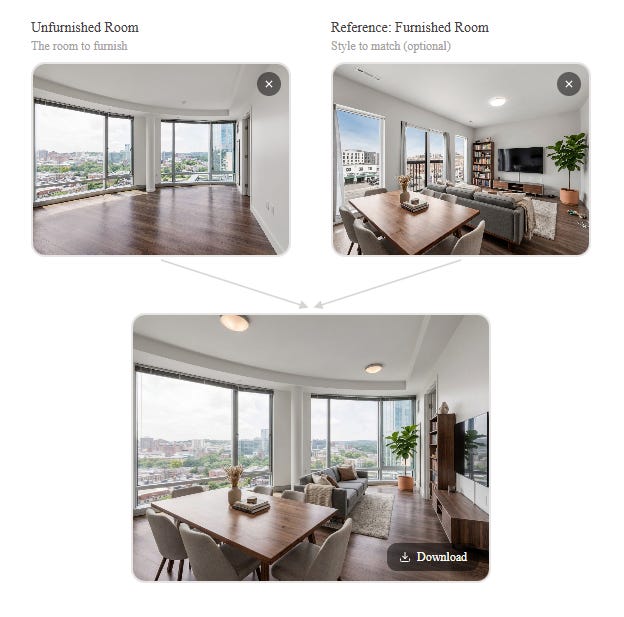 The script remained essential because it reduced the cost and time required to produce each image set. The customer purchased a completed outcome, and the software created leverage inside the delivery system.
Simon’s original offer might have sounded like this:
An AI-powered fintech and accounting platform with advanced integrations and automated financial workflows.
That describes the mechanism.
An outcome-based offer sounds more like this:
We close the monthly books for software development firms within five business days using the accounting systems they already have.
The second version identifies the customer, job, result, delivery period, and implementation boundary. A buyer can evaluate it without understanding how the software works.
This is an owned outcome: the largest valuable result a company can credibly accept responsibility for delivering. The company organizes its software, people, process, and pricing around that result.
Ownership still needs boundaries. An accounting company cannot control whether a client submits complete records. A marketing company cannot guarantee that every prospect purchases. The useful promise covers the largest measurable result the company can reliably influence.
Software remains essential inside this model. It lets the company deliver faster, more consistently, and at a better margin. The product becomes leverage inside an offer organized around the result.
A valuable capability can still support a weak business when customers have many equivalent ways to obtain it. The relevant question is how much value disappears when your company is removed.
Bessemer Venture Partners’ 2026 vertical-AI playbook recommends precisely defined, repeatable processes with clear return on investment. Its defensibility guidance emphasizes nuanced compliance and security needs, multimodal systems, adaptable model architecture, high-quality data, and deep workflow integration. A single model call supplies only one component of these advantages.
Founders often treat build difficulty as proof of economic value. A product may contain elegant architecture, difficult integrations, and years of work. Buyers judge the available alternatives today.
Generic software capabilities are becoming cheaper to reproduce. Durable advantages can still accumulate around proprietary data, workflow knowledge, trusted delivery, integrations, compliance, distribution, and switching costs.
Ask one question:
What becomes more valuable, more embedded, or harder to reproduce each time a customer uses this company?
If the answer is nothing, the product may be a temporary interface over a capability that is becoming cheaper. If every delivery improves the process, deepens an integration, adds proprietary knowledge, earns trust, or makes the next customer easier to reach, the company is building more than a feature.
Spend seven days collecting market evidence and trying to sell one narrow outcome manually. The exercise should produce a clearer customer, offer, channel, and list of genuine product gaps.
The inputs already exist in most companies: recorded sales objections, support conversations, cancellation reasons, usage patterns, and customer workarounds. ConvertKit used direct conversations to identify professional bloggers with existing lists as its strongest customers. Simon’s company found its clearest demand inside one engineering community. The seven-day exercise turns those scattered observations into a testable offer.
Day 1: Collect the evidence
Gather twenty real questions, complaints, objections, cancellations, and feature requests. Keep the customer’s language intact.
Day 2: Separate the customers
Group the evidence by role, company type, operating environment, and trigger event. Avoid combining customers simply because they could use the same software.
Day 3: Find the urgent cluster
Identify the smallest group with the most frequent and costly repeated problem. Note which customers already use a workaround or budget for an alternative.
Day 4: Rewrite the offer
Name one customer, one job, one measurable result, one delivery period, and the conditions required from the buyer.
Day 5: Find the room
Locate the places where this group already discusses the problem. Record the questions, language, trusted sources, and competing solutions that recur.
Day 6: Sell the outcome manually
Offer to complete the job with the product operating behind the scenes. Manual work reveals what the buyer values and where the product genuinely fails.
Day 7: Record what compounds
Write down which parts became faster, cheaper, more reliable, or harder to copy after one delivery. Those gains point toward the moat.
The exercise listens for repeated evidence of what customers already value and leaves product decisions with the company.

Concorde flew passengers across the Atlantic in under three hours. Only 14 entered commercial service. A remarkable product can still face an unforgiving market.
A good product becomes a good business when a specific customer urgently wants its result, can find and understand the offer, and gives the company a durable way to capture part of the value created.
The wedge identifies whom to serve, the owned outcome defines what to sell, and distribution determines where to enter the conversation. The product provides the delivery mechanism. The moat determines how much of the value the company can retain.
Simon had spent years improving the fourth part while leaving the other four unclear. His software was being asked to identify the customer, create urgency, explain the offer, find the audience, deliver the result, and defend the company at the same time.
That was too much of the business for the software to carry. The next step was to find the people who already needed the result, enter the room where they were discussing it, and offer to own a clearly defined part of the work. A good product could then make that result faster, better, and more repeatable.