 Altitude Development Partners
On May 6, 1954, Roger Bannister ran a mile in 3 minutes and 59 seconds. For years, completing a mile run in under 4 minutes was generally considered physically impossible. However, 46 days later the world record was taken by John Landy, and a year later, three men ran sub-4 in a single race. What happened? What Changed?
Guinness World Records
Before SpaceX existed, Elon Musk had an idea to send a tiny greenhouse to Mars, grow the first plant on another planet, and beam back the photo. When Musk explained why anyone should care, he said:
“People tend to respond to precedents and superlatives. We have been to the moon before, so we can make it to Mars, and this would be the furthest that life ever traveled.”
Today, SpaceX is one of the most valuable companies in the world, so how did Elon Musk get everyone excited about the prospect of reaching Mars?
A precedent is a past achievement you point to so people believe your hard thing is possible. “Humans already walked on the Moon, so Mars is reachable.” A precedent can dissolve the objection “that it can’t be done” and replaces it with “that can be done, and these people might be the ones to do it.”
For most of the 20th century, doctors argued the human body would fail trying to run a mile in under four minutes. When Roger Bannister finally did it, the barrier for the rest of the runners turned out to be mostly psychological. John Landy beat Bannister’s time within 46 days. A year later, three men ran sub-four in a single race. Nothing about human physiology had changed — only the belief that it could be done (HISTORY).
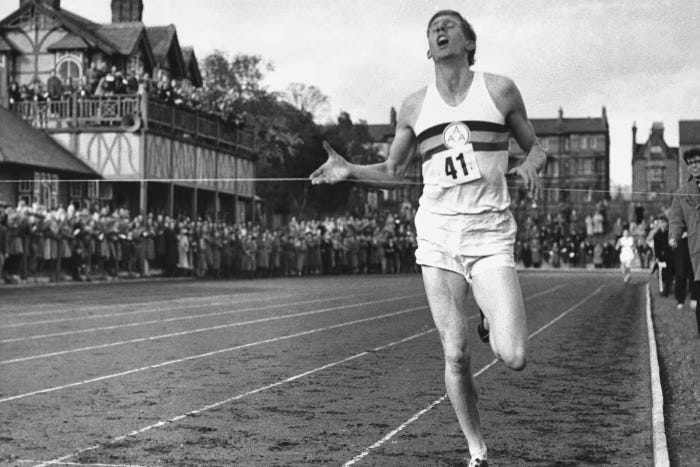
That is exactly what a precedent does for a founder. When you point to a thing the world once called impossible and is now routine, you move your own audacious goal from the “crazy” column to the “someone will do this, why not us” column. Musk does this all the time. He points to Apollo to make Mars feel reachable, then shows SpaceX’s own track record to make each next goal obvious.
A superlative is a truthful claim to being the first, biggest, fastest, cheapest, strongest, or best at something. “The first life on Mars” is a superlative. So is “the world’s most distinctive water brand” or “the first privately funded rocket to reach orbit.”
In 1933, psychiatrist Hedwig von Restorff documented what’s now called the von Restorff effect, or the isolation effect: the item that stands out from its surroundings is the one people remember. Our brains are wired to flag the odd one out and store it, while everything that blends in fades. A superlative is a deliberate way to be the odd one out in a crowded market (Wikipedia).
Being first compounds this. The primacy effect means people over-weight and better recall the first information they encounter, and decades of marketing research show that consumers remember pioneer brands more often and treat them as the prototype for an entire category. It’s why a category can become synonymous with one name like Xerox, Google, Uber (Journal of the Academy of Marketing Science).
But being first is not the same as winning. Research by Tellis and Golder found that market pioneers fail roughly 47% of the time and hold only about 10% average market share, while the enduring leaders in a category often entered on average 13 years after the pioneer (MIT Sloan Management Review).
The lesson is that your superlative has to be true and defensible. it is a claim you need to be able to keep until your company dies.
Yelling out superlatives left and right won’t give you any business success and most likely will just attract some bad reputation. Used once, a precedent or superlative is a spike of attention or a marketing boost. However, superlatives used consistently over years creates a narrative that compounds into a competitive moat. And without that moat a business may only hope to sustain its existence but never make any true profits.
Strategist Hamilton Helmer, in 7 Powers, defines Branding as a real source of power: “the durable attribution of higher value to an objectively identical offering.” Customers pay more for the same product because of associations that have accumulated over time. Helmer notes brand power can only be built through a long sequence of reinforcing actions, a slow process he calls hysteresis. A competitor cannot copy a decade of consistent story. That’s the strongest moat. (NFX).
The category-design research in Play Bigger shows that the “category king” captures roughly 76% of the total market value of that category. Defining a category is itself a superlative (“the first and only X”), and category leadership is one of the most durable advantages in business (summary).
There’s even a macroeconomic case for it. Nobel laureate Robert Shiller’s Narrative Economics argues that stories with human interest go viral and materially move markets and prices (Princeton University Press).
You can watch all of this play out in real companies:
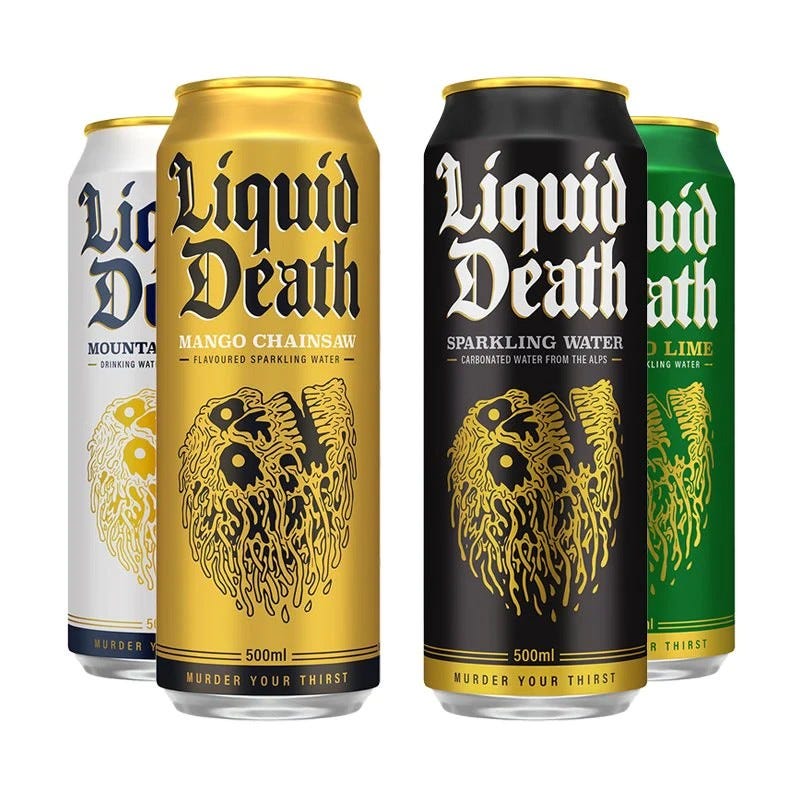
Three questions turn this from theory into your next quarter:
First, what is your true superlative? If you can’t honestly claim “first” or “biggest” yet, get specific until you can. “the first [thing] for [audience] that [does X].” Narrow the category until your claim is both true and defensible.
Second, what precedent removes the doubt? Find the “four-minute mile” in your space. It should be the thing people assumed was impossible until someone did it. Use it to make your own goal feel inevitable and obvious.
Third, can you repeat it for years? The excitement comes from saying it well once. The moat comes from earning the right to say it, consistently, for a decade, until the story is so welded to your name that competitors can’t pry it loose.
That last point is the whole game, and it’s why this strategy is really a moat strategy wearing a marketing costume. If you want the deeper mechanics of how scarce, hard-to-copy advantages actually form and compound, read What is a moat and how to get one next.
Precedents and Superlatives: How To Build Excitement Around What You’re Offering was originally published in Altitudedp on Medium, where people are continuing the conversation by highlighting and responding to this story.