 Altitude Development Partners
As CMO of Altitude Development Partners, part of my job is understanding where the market is actually moving, not where people say it’s moving. This whole thing started as a personal test. I wanted to know whether vibecoding was genuinely useful or just a trend that looks good in think pieces.
The format of the test was simple: build a real, functional product over a weekend using Claude, then take it into a meeting with a multinational company and see what happens. Two days after that meeting, I got an offer.
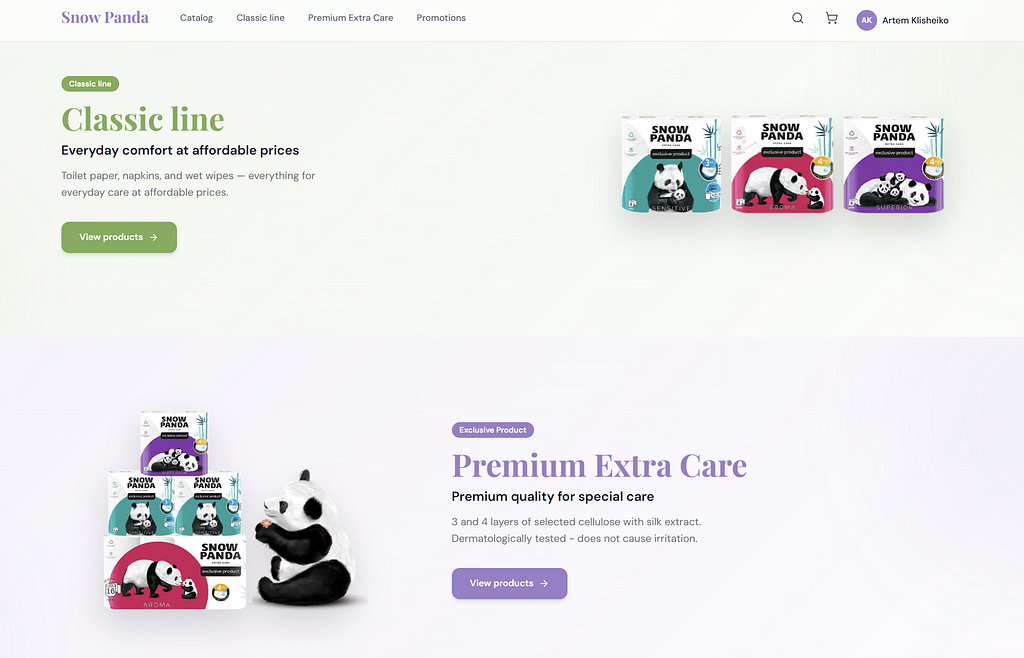
Snow Panda is a Ukrainian household brand: toilet paper, paper towels, wet wipes with established retail presence, but no direct-to-consumer channel. No promo infrastructure, no loyalty system, no way to track a customer past the point of sale.
Over the weekend I built the missing layer: a full storefront carrying their real catalog of 29 SKUs across two product lines, with cart, checkout, and payments. A rules-based promo engine that supports percentage and fixed discounts, usage caps, and date ranges. A tiered loyalty program with point earning and redemption at checkout. Real-time delivery tracking with customer notifications. Transactional email with open and click tracking built in.
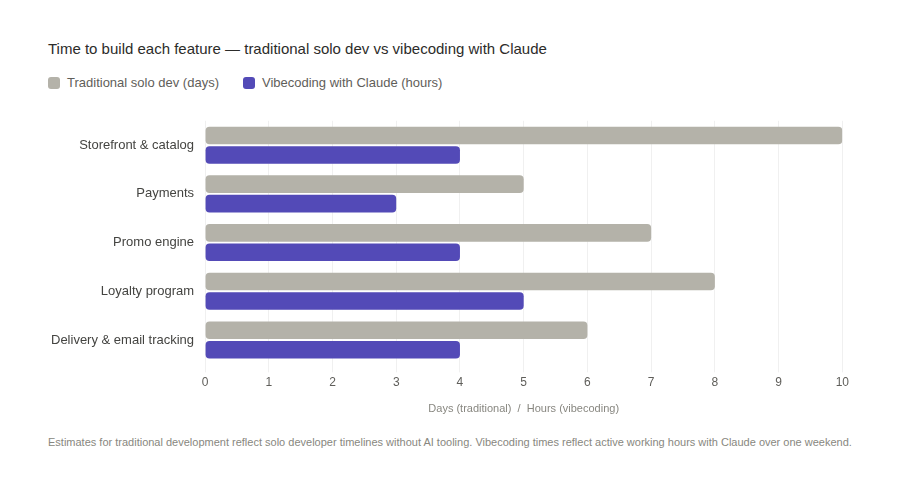
To put the timeline in perspective, here’s how long each feature would realistically take a solo developer working without AI tooling, compared to the actual hours it took with Claude:
The meeting opened with a walkthrough of the platform rather than a conversation about my background, and the dynamic shifted almost immediately into a product discussion, which features were built which way, what the architecture decisions were, what would come next with more time.
The more interesting moment came later in the conversation. The team mentioned they were dealing with a real operational problem: too much manual work, data fragmented across systems, no reliable single source of truth for decision-making. They asked, half-jokingly, whether I had something for that.
The honest answer was that I did, just not built for their industry. Distilyze is an analytics platform me and my team built for real estate, it unifies property management data in one place so that portfolio decisions can be made from a single dashboard rather than a stack of spreadsheets. Different niche, but the underlying problem is identical: manual processes eating time, and data that should be centralized sitting in five different places.
What followed was an unplanned brainstorm. We stopped looking at the D2C project and started pulling up Distilyze, working through how the same logic could map onto their workflow, what would transfer directly and what would need to be rebuilt for their context. Nobody had scheduled that conversation because it emerged from having two relevant things to show rather than one.
Most interview processes are structured around the candidate describing what they might do if hired. The company tries to evaluate those descriptions against their needs and makes a probabilistic bet. A working product built around the company’s actual context removes most of that uncertainty and the conversation starts from evidence rather than claims.
According to Second Talent’s 2026 Vibe Coding Statistics report, 74% of developers report higher productivity when using AI-assisted coding approaches, and 87% of Fortune 500 companies have already adopted at least one vibe coding platform. ¹ Software engineer vacancies surged 30% in 2026, reaching a three-year high, partly because AI is expanding the total surface area of what gets built and maintained. ² The tools to compress weeks of development into a weekend now exist and are widely accessible and most candidates just haven’t thought about applying that to how they prepare for interviews.
The other thing worth noting is that having multiple projects compounds in ways you don’t fully anticipate. The D2C platform opened the conversation, but it was Distilyze, built for a completely different context and that turned the meeting into something neither side had planned. A body of work does things a resume structurally cannot.
This works when the organization evaluates people on what they can produce, and not every organization operates that way. Some hiring processes are credential-first by design and a product demo has no effect on the outcome.
It also requires enough domain knowledge to know what to build, and enough product judgment to evaluate what the AI produces and catch when something is wrong. The speed is real, but shipping something coherent still requires thinking clearly about the problem before touching the tools.
The offer came from a product review that became a brainstorm that nobody had put on the agenda. That’s a version of a hiring process that’s more honest about how good work actually gets recognized and not through describing past experience, but through showing current output and thinking through real problems together.
The worst case is a weekend spent building something useful that doesn’t land with that particular company. The next conversation always starts from a better position than the one before.
I Built a Full D2C Platform in 48 Hours with Claude and Got a Job Offer was originally published in Altitudedp on Medium, where people are continuing the conversation by highlighting and responding to this story.