 Altitude Development Partners
The transition from traditional information retrieval to Generative Engines (GEs) such as ChatGPT, Perplexity, and Google AI Overviews has fundamentally changed how audiences discover content. Rather than navigating a list of blue links, users now ask GEs to synthesize information and retrieve answers. For independent writers, Substack authors, and researchers, this shift requires a new approach to digital visibility: Generative Engine Optimization (GEO).
To establish authority in the age of large language models (LLMs), it is critical to understand the mechanics of information retrieval. GEO focuses on structuring content for information synthesis and Retrieval-Augmented Generation (RAG).
Success in this ecosystem relies on a content strategy built around concise facts, statistics, and verifiable answers. Your primary success metric shifts from search engine ranking position to citation share and mention frequency across AI outputs.
As generative models become more central to daily search and decision-making, audience trust varies significantly by industry.
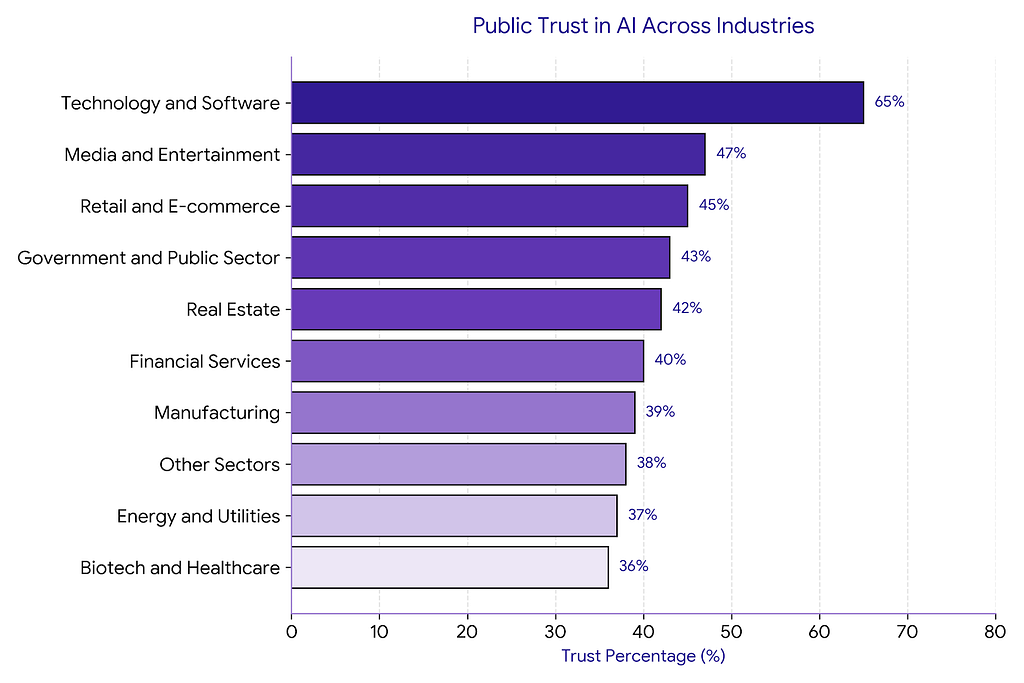
This variance in trust highlights a significant opportunity for niche content optimization. Creating authoritative, well-cited material for sectors with low trust, such as Healthcare and Finance, can serve as a crucial source for LLMs seeking reliable information to answer complex user queries.
Whether you publish on Substack or Medium, your text must be readable and indexable by LLM retrievers.
AI summarizers prioritize self-contained chunks. Use the Inverted Pyramid model: lead with the direct answer or the main takeaway in the first one or two sentences.
Recent research indicates that LLMs rely heavily on verifiable data to avoid hallucinations.
GEO Tip: Replace vague statements with verifiable data. For example, change “our model is highly effective” to “our system improves output accuracy by 43 percent.” Incorporating 19 or more verifiable data points per article doubles the likelihood of citation in AI-generated summaries.
Dynamic, JavaScript-rendered websites or paywalled portals are often missed by AI crawlers. Keep foundational research and core statistics plain, un-gated, and accessible. Use Medium and Substack’s built-in formatting tools (bullet points, blockquotes, and tables) to structure your data clearly.
At AltitudeDP, this technology is built directly into current projects and data architectures. By implementing RAG-friendly formats, structuring data, and optimizing digital platforms for AI extractability, foundational work remains visible, authoritative, and properly cited in the era of artificial intelligence.
GEs operate on a feedback loop where an entity’s authority is validated by co-citations. When a GE searches the web for sources, it cross-references mentions across publications, newsletters, and community hubs (Smyth & Dawson, 2026). To increase your share of citations:
Mastering GEO means augmenting independent writing with clarity and precision. By applying these strategies, writers can ensure their content remains visible and highly cited in the AI era.
Generative Engine Optimization (GEO) for Writers & Researchers was originally published in Altitudedp on Medium, where people are continuing the conversation by highlighting and responding to this story.